
Modern facial plastic surgery has evolved dramatically over the past several decades, shifting from surface-level skin tightening to deeper structural restoration of the face. Among the most advanced approaches is Vertical Restore®, a technique developed by San Diego facial plastic surgeon Dr. Amir Karam.
Dr. Karam’s work has been dedicated to refining facial rejuvenation procedures that restore the natural architecture of the face rather than pulling or stretching the skin. With more than 20 years of surgical experience and over 7,000 natural outcomes, his approach focuses on lifting facial tissues vertically—the direction aging actually occurs—allowing for a more complete and natural restoration.
Unlike traditional facelifts that primarily tighten skin horizontally toward the ears, Vertical Restore® repositions deeper facial structures and rejuvenates the outer brow, midface, jawline, and neck simultaneously. This comprehensive approach reflects the goal most patients share when they seek facial rejuvenation: to simply look as young as they feel.
To understand why newer techniques like Vertical Restore® represent the next evolution in facelift surgery, it’s helpful first to understand how facial aging really happens.
Facial Aging Basics
Facial aging is not caused solely by loose skin. Instead, it involves a combination of structural changes beneath the skin, including:
- The descent of facial tissues
- Thinning of connective layers
- Loss of volume
- Reduced skin elasticity
One of the most important anatomical structures involved in facial aging is the superficial musculoaponeurotic system (SMAS), a fibromuscular layer that connects facial muscles and soft tissues. This structure gradually weakens and descends with age, contributing to sagging cheeks, jowls, and neck laxity (Oxford Academic).
As the SMAS and surrounding tissues descend, the youthful “inverted triangle” shape of the face becomes more rectangular. Common visible changes include:
- Sagging of the cheeks and midface
- Formation of jowls along the jawline
- Neck heaviness and skin laxity
- Deepening folds around the nose and mouth
- Drooping of the outer brow
Because these changes occur within deeper facial structures, effective facial rejuvenation requires more than tightening the skin—it requires repositioning the underlying anatomy.
The Evolution of Facelift Techniques
Early facelifts focused primarily on removing excess skin and tightening it. While this temporarily improved wrinkles, it often produced unnatural results and did not address deeper structural aging.
Later advancements introduced techniques that reposition deeper facial tissues, including SMAS and deep plane facelifts. These approaches lift the deeper facial structures rather than relying solely on skin tension, helping create more natural, longer-lasting results (Aesthetic Surgery Journal).
Research comparing facelift techniques consistently shows that deeper structural approaches can yield greater longevity and patient satisfaction than more superficial methods (Comparison of Deep SMAS Lift and MACS in Facelift: A Meta-Analysis - PMC).
However, even these advanced procedures often focus primarily on the lower face and jawline. This limitation led to the development of more comprehensive approaches to facial rejuvenation.
The Goal of Advanced Facial Rejuvenation
Today’s patients are not looking for dramatic changes. They want to look refreshed, youthful, and vibrant—without obvious signs of surgery.
That’s why the most advanced facelift techniques prioritize:
- Natural results
- Comprehensive facial balance
- Long-lasting structural restoration
- Preservation of each patient’s identity
When performed properly, modern facial plastic surgery should help patients look like the best version of themselves—not like a different person.
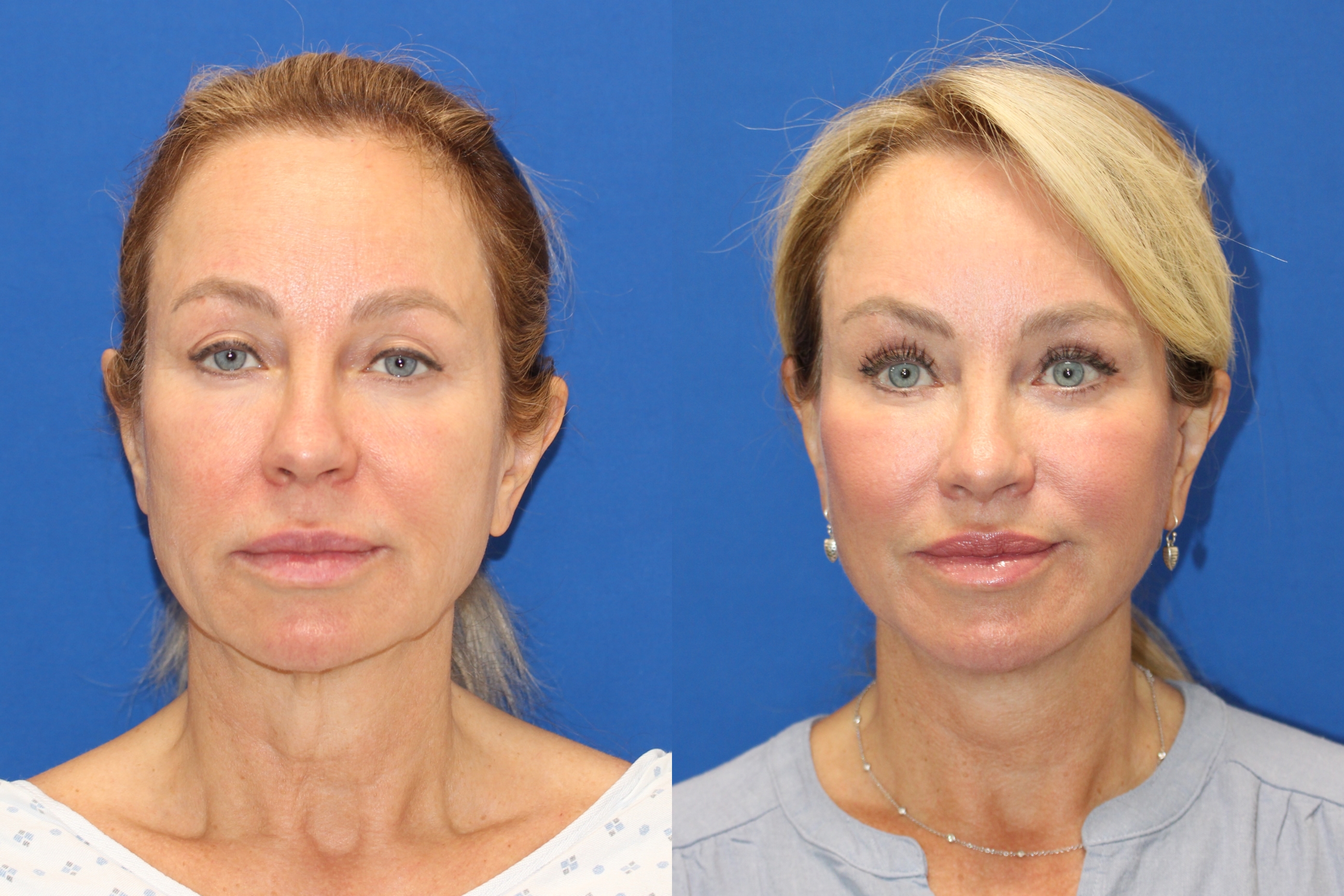
The Vertical Restore®: A Truly Modern Advancement
The Vertical Restore® represents a major step forward in modern facelift surgery. After years of performing facial plastic surgery and studying the patterns of facial aging, Dr. Amir Karam developed this technique to address a longstanding problem in traditional facelift procedures: many approaches tightened skin but failed to truly restore the face.
Vertical Restore® was designed to correct facial aging at its structural source. By repositioning deeper facial tissues in a more natural direction, the procedure restores youthful contours while preserving each patient’s natural identity.
Let’s look at some highlights:
Lifting the Face the Way It Actually Ages
Facial tissues descend vertically over time due to gravity and the gradual loosening of facial support structures. Many traditional facelifts counteract this by pulling the skin sideways toward the ears, which can flatten facial contours and create an unnatural appearance.
Vertical Restore® takes the opposite approach. Instead of pulling the skin, the procedure lifts facial structures upward, guiding them back toward their original youthful position. The result is facial rejuvenation that looks refreshed and balanced rather than tight or stretched.
Treating the Entire Face
Another defining feature of Vertical Restore® is its comprehensive scope.
Rather than focusing only on the lower face, the procedure rejuvenates several key regions simultaneously:
- Outer brow
- Midface
- Jawline
- Neck
Addressing the entire face helps restore harmony and balance, creating results that appear complete and natural.
Deep Structural Repositioning
Vertical Restore® also incorporates advanced deep-plane principles to release key facial ligaments and reposition deeper tissues safely and effectively. This structural repositioning allows the face to be restored without placing tension on the skin.
Why Specialization Matters in Facial Plastic Surgery
The face is complex. It controls expression, identity, and balance. Achieving natural-looking facial rejuvenation requires not only technical skill but deep, focused expertise, because the most advanced facelift technique is only as effective as the surgeon performing it.
Dr. Amir Karam has dedicated his career exclusively to facial plastic surgery—refining techniques that restore youthful facial structure while preserving each patient’s natural identity.
His background reflects that focus:
- Residency training in otolaryngology–head and neck surgery, specializing in the anatomy and surgery of the face, head, and neck
- Advanced fellowship training in facial plastic and reconstructive surgery, reserved for surgeons who dedicate their practice to facial procedures
- Author of peer-reviewed research and surgical textbook chapters on facial rejuvenation techniques
- Co-author of the medical text Rejuvenation of the Aging Face, used to educate surgeons on modern facial rejuvenation strategies
- Educator and mentor, training residents and medical students in facial anatomy and surgical technique
This level of specialization allows a surgeon to continually refine procedures that address the face with precision and nuance. For patients considering advanced facial rejuvenation, that focus matters.
Choosing the Most Advanced Facelift Technique Means Choosing Dr. Karam
When patients ask what the most advanced facelift technique is, the answer ultimately goes beyond the procedure itself. It comes down to the philosophy, experience, and specialization behind it.
True facial rejuvenation should restore the natural structure of the face—never distort it. That belief is what led Dr. Amir Karam to develop the Vertical Restore®, an approach designed to lift facial tissues in harmony with how the face actually ages. By addressing the outer brow, midface, jawline, and neck together, this technique focuses on restoring balance, proportion, and youthful contours.
If you’re ready to learn more about the most advanced approaches to facelift surgery and how Vertical Restore® can restore a youthful, balanced appearance, we invite you to schedule a consultation with Dr. Amir Karam, widely regarded by many patients as one of the best facial plastic surgeons for natural facial rejuvenation.