Dr. Amir Karam explains how he combined the Vertical Restore facelift with targeted facial fat transfer to restore youthful facial contours while preserving his patient’s natural appearance.
When people see a dramatic facelift before-and-after photograph, they often assume the patient must have looked significantly older before surgery.
But that’s not always the case.
My patient Jamie was 60 years old when she decided to undergo facial rejuvenation. She had beautiful skin, relatively little eyelid aging, and an appearance that many people already considered youthful. In fact, when I shared her results on social media, one of the most common reactions was that she didn’t need a facelift in the first place.
Her transformation eventually attracted the attention of People magazine, which featured her experience.
But Jamie’s case illustrates an important principle in facial plastic surgery: the decision to have a facelift isn’t determined simply by how old someone looks. It’s based on the anatomical changes that have occurred and whether those changes are meaningful to the patient.
For Jamie, the issue wasn’t poor skin quality or severe facial aging. It was the gradual loss of her youthful facial contours.
And correcting those changes required a very specific surgical approach.
Patient Background: Why Jamie Considered a Facelift at 60
Jamie had never expected to pursue facial plastic surgery. Like many people, she associated facelifts with the tight, pulled appearance sometimes seen after older surgical techniques.
But as she approached 60, she began noticing changes in her face that no longer reflected how she remembered herself.
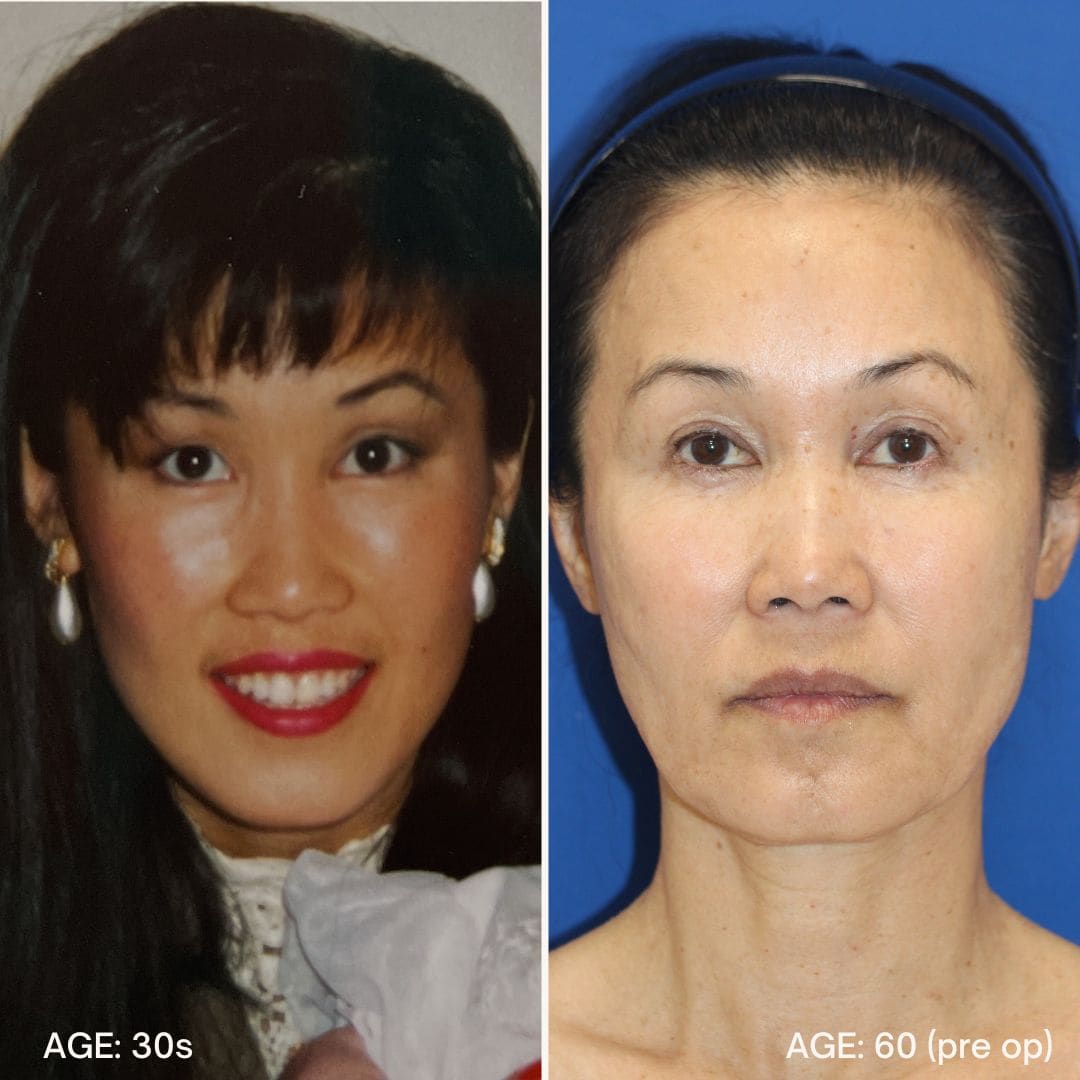
Her cheeks appeared slightly lower, her jawline was becoming heavier, and the natural fullness around her eyes and temples had diminished.
These changes were relatively subtle, especially because her skin was so well preserved. But to Jamie, they were noticeable.
After following my work for several years and seeing the natural-looking results of Vertical Restore, she decided to explore whether facial rejuvenation could help her look more like her younger self.
During our evaluation, my responsibility was to identify exactly what had changed, determine which procedures would address those changes, and avoid performing anything unnecessary.
Surgical Assessment: Three Important Findings
Facial rejuvenation begins with an anatomical diagnosis. I evaluate facial shape, tissue position, volume distribution, skin quality, and the relationship between the different regions of the face.
Jamie’s examination revealed three important findings.
1. Descent of the Cheeks and Lower Facial Tissues
The most significant change was the downward movement of her facial tissues.
In a younger face, the cheeks sit higher, creating fullness through the midface and a relatively narrow, defined jawline.
With aging, the deeper facial tissues gradually descend. As cheek tissue moves downward, it contributes to jowl formation and heaviness along the lower face.
This can transform a naturally heart-shaped face into one that appears more square or rectangular.
In Jamie’s case, the descending tissues had begun to obscure her jawline and change her facial proportions.
Importantly, this wasn’t simply excess skin that needed to be tightened. The underlying facial tissues needed to be repositioned.
2. Selective Facial Volume Loss
Jamie also had age-related volume loss, particularly around her temples, upper and lower eyelid regions, and portions of the lower face.
Volume restoration is an important component of my facial rejuvenation approach, but it requires precision.
Not every hollow area needs filler or fat transfer. Sometimes an area appears hollow because the adjacent tissue has descended.
This distinction is particularly important in the cheeks.
Rather than adding large amounts of fat to Jamie’s midface, I planned to restore the cheek tissues to their original position. That movement would naturally return much of the fullness to the upper face.
Fat transfer could then be reserved for areas where true volume loss remained.
3. Excellent Skin Quality With Minimal Eyelid Aging
One of Jamie’s most favorable characteristics was her skin quality.
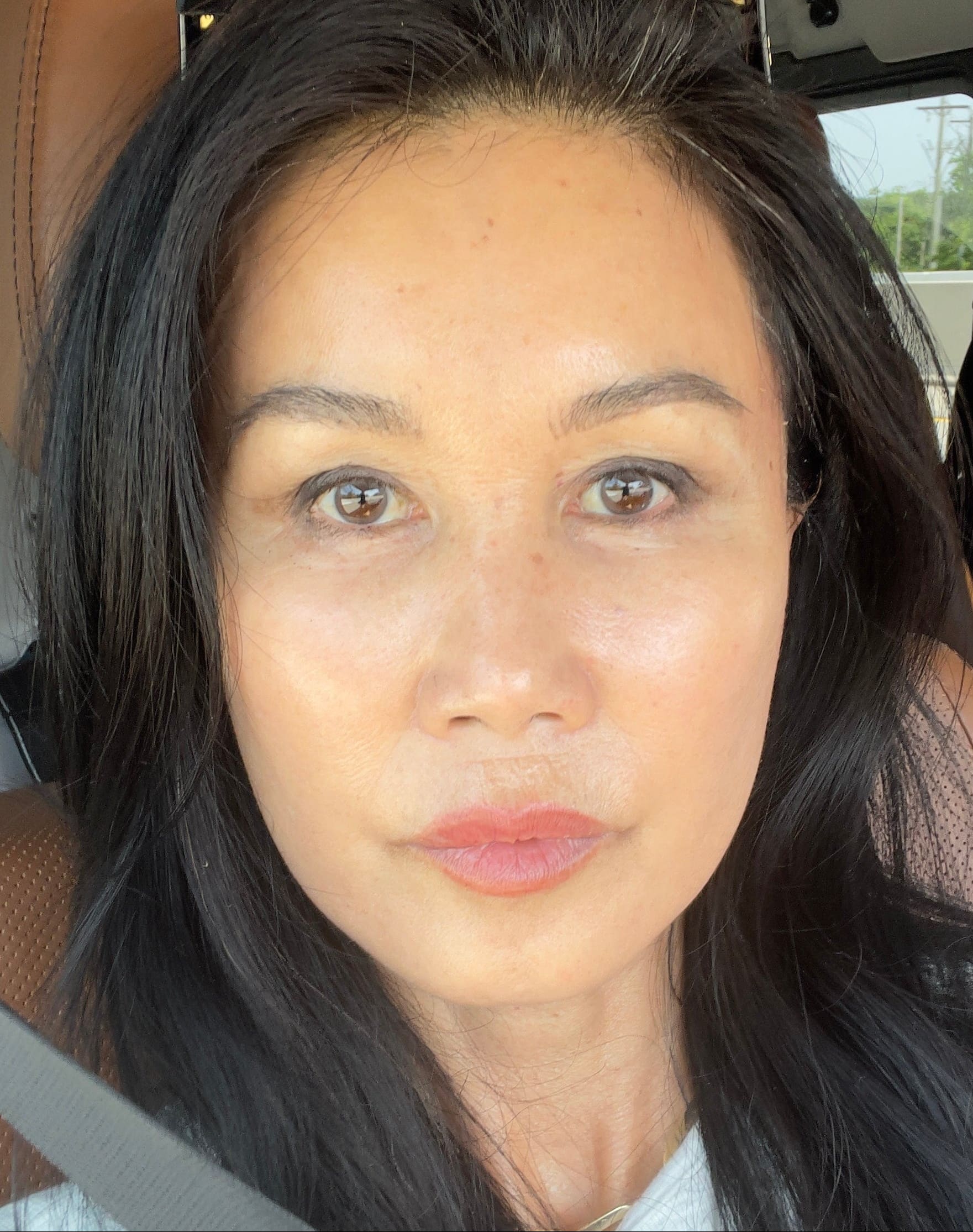
At 60, she had remarkably smooth, healthy-looking skin, reflecting years of diligent sun protection and skincare.
She also had relatively little excess upper or lower eyelid skin.
This meant she did not need upper or lower blepharoplasty as part of her surgical plan.
I believe this is an important aspect of responsible surgical planning. A comprehensive facial rejuvenation doesn’t mean performing every available procedure. It means addressing the specific anatomical changes that are present.
What made Jamie such a good candidate for facial rejuvenation was that we could clearly identify the anatomical changes responsible for her concerns. Her skin was already beautifully preserved, and the changes in facial shape and volume were precisely the issues we could address surgically.
For Jamie, the appropriate combination was Vertical Restore and selective fat transfer.
The Surgical Plan: Vertical Restore and Facial Fat Transfer
The primary objective was to restore Jamie’s youthful facial shape while maintaining the features that made her recognizable.
Vertical Restore® Facelift
Vertical Restore is the comprehensive facial rejuvenation technique I developed to address the descent of the facial tissues.
Rather than relying primarily on pulling the skin backward, the technique repositions the deeper facial structures in a predominantly vertical direction.
One of the defining characteristics of Vertical Restore is that it addresses facial aging comprehensively, from the lateral brow and midface through the jawline and neck, rather than treating the lower face in isolation.
For Jamie, restoring the cheeks to a higher position was particularly important. As the tissues moved upward, her lower face became more defined, and the heaviness along her jawline improved.
The goal was to recreate her natural facial contours, not introduce a new shape.
Targeted Facial Fat Transfer
I combined the lifting procedure with carefully planned fat transfer to restore volume in areas that had become depleted.
Fat transfer uses the patient’s own fat to replenish selected regions of the face.
In Jamie’s case, the objective was to soften age-related hollowing around the eyes, temples, and other areas of volume loss without making her face appear overly full.
One of the most common mistakes in facial rejuvenation is attempting to replace displaced tissue with additional volume.
If the cheeks have descended, simply adding more volume can create an unnatural, heavy appearance.
By first restoring tissue position and then adding volume selectively, we can create a more balanced result.
Why Eyelid Surgery Wasn’t Necessary
Although blepharoplasty is frequently performed alongside a facelift, Jamie didn’t have significant excess eyelid skin or other eyelid changes that required surgical correction.
We therefore avoided unnecessary eyelid procedures.
Her case demonstrates why surgical plans should be individualized rather than based on a standard combination of procedures or the patient’s age.
Recovery After Vertical Restore: Jamie’s Experience
Recovery is one of the most common concerns among patients considering a facelift.
Jamie’s experience provides a useful example of what patients may encounter.
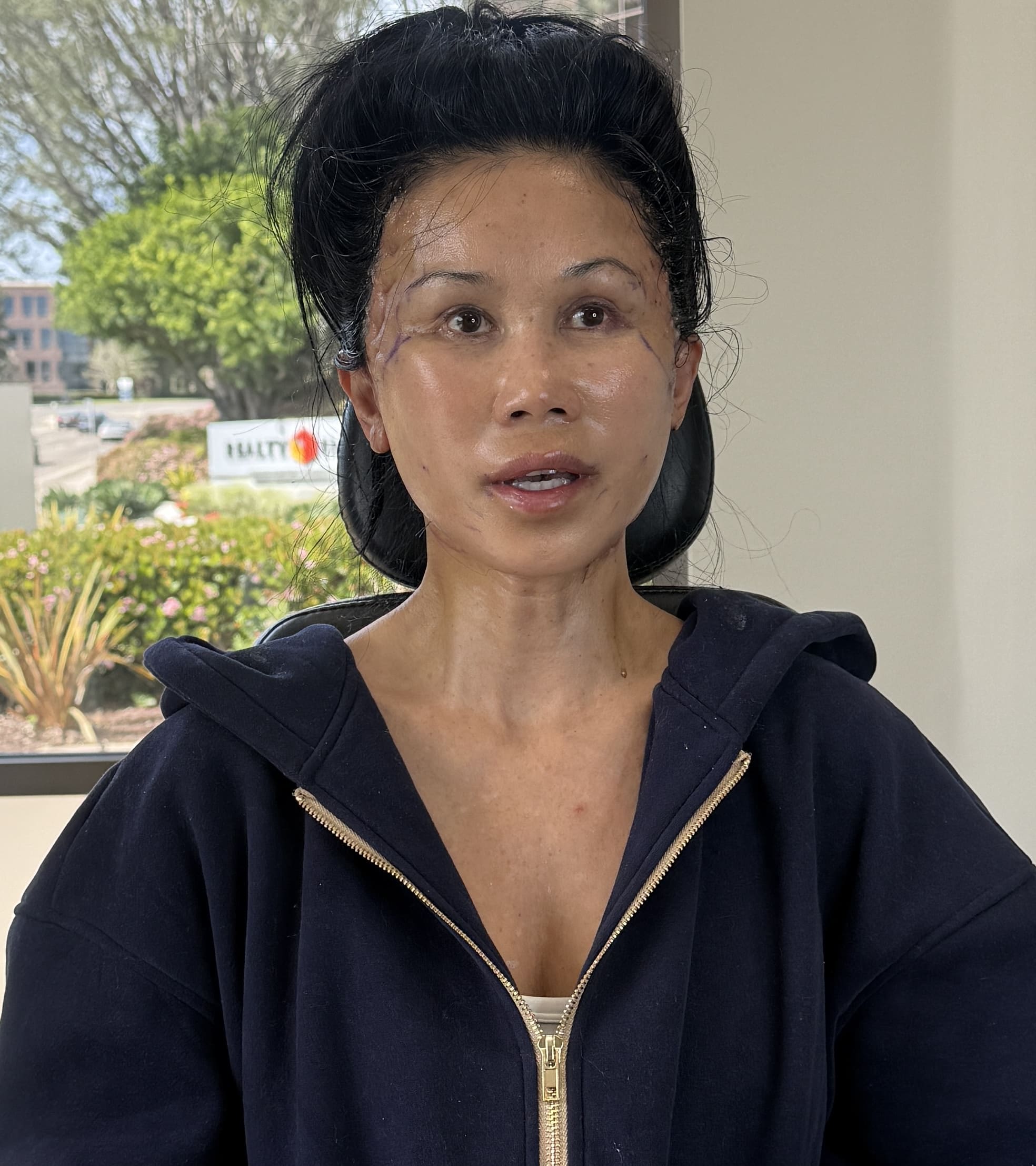
During the first week, she experienced the expected swelling, bruising, and discomfort associated with healing. In her People magazine interview, she also described the emotional challenge of seeing her face swollen and temporarily different from what she was accustomed to.
Although her postoperative pain was manageable, the early recovery period was still challenging.
I think it’s important to distinguish between pain and the overall recovery experience. A patient can have relatively little pain and still find swelling, sleeping restrictions, and temporary changes in appearance uncomfortable.
In general, the first one to two weeks represent the most visible phase of healing.
By approximately two weeks, many Vertical Restore patients feel comfortable resuming routine social activities, although individual recovery varies.
Residual swelling continues to improve over the following months, allowing the facial contours to become progressively more defined.
For Jamie, the changes became increasingly apparent as healing progressed.
Four-Month Results: What Changed?
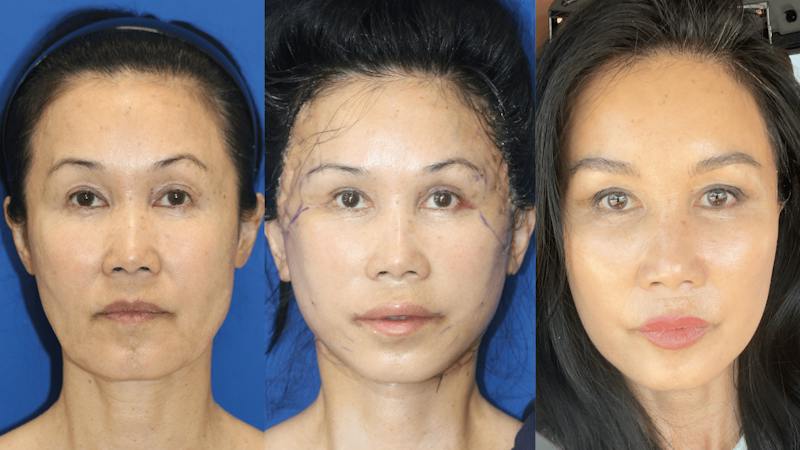
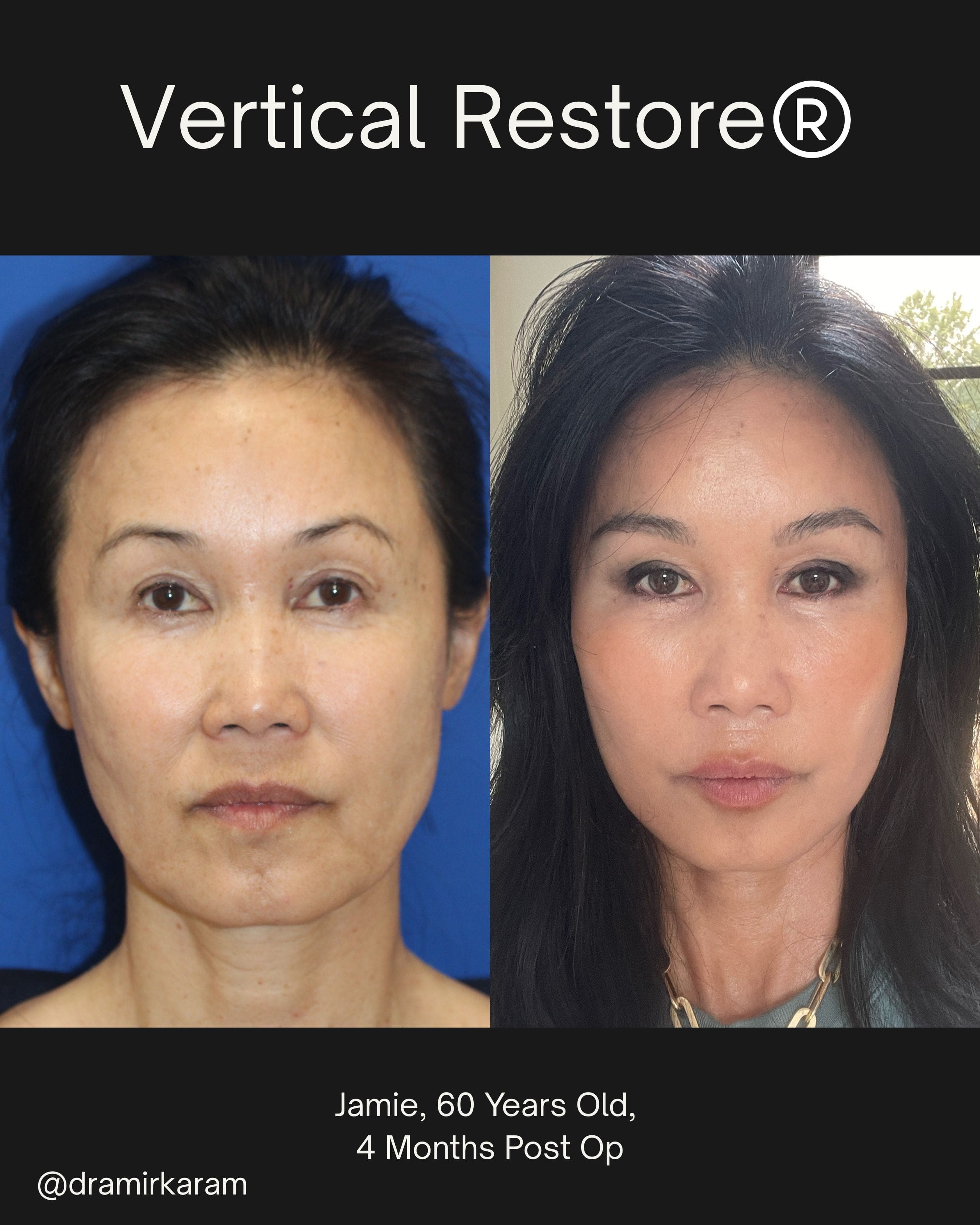
At approximately four months after surgery, Jamie returned for photographs that demonstrated the results of her facial rejuvenation.
Several improvements were particularly noticeable.
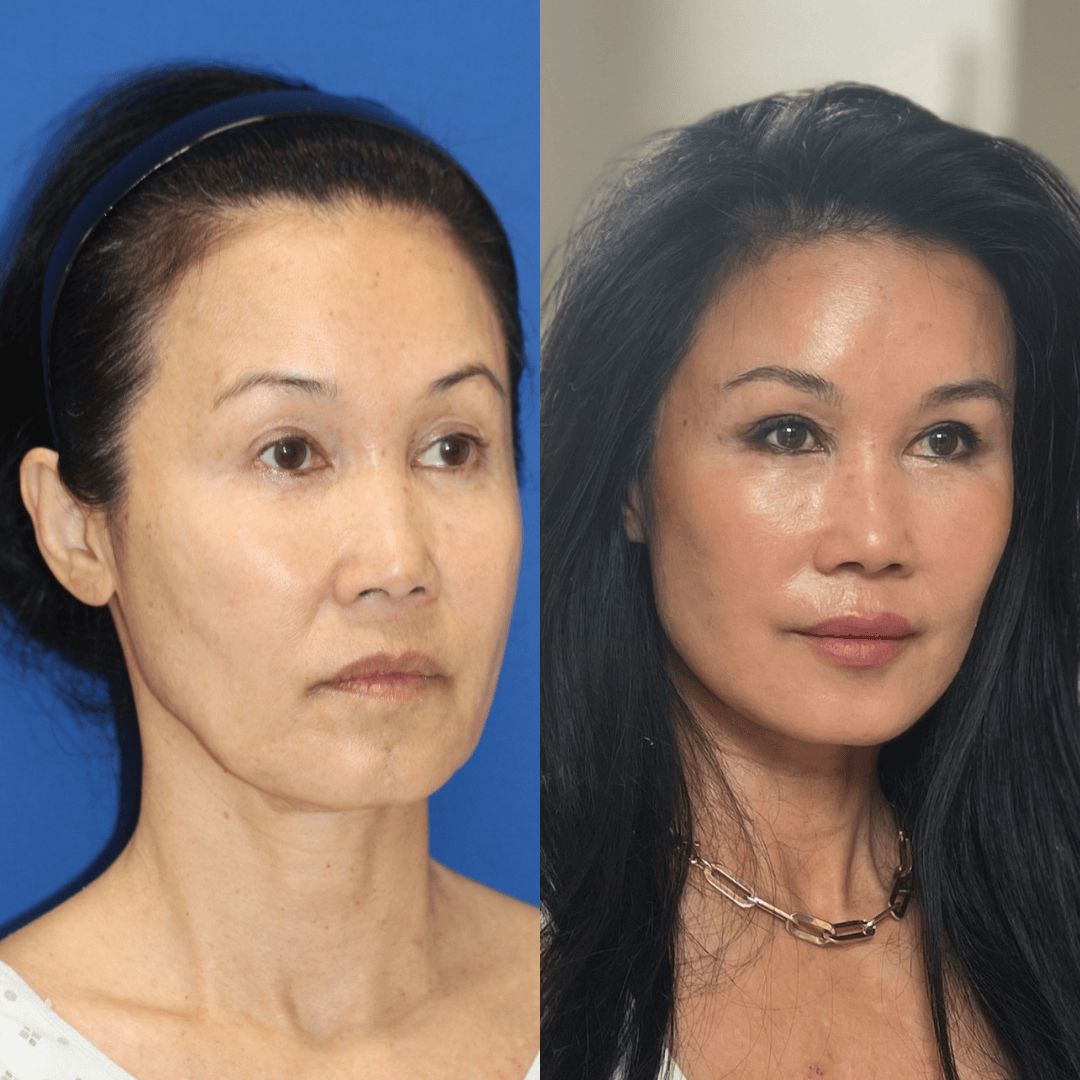
Her facial shape was more youthful. The lower facial heaviness had been reduced, her jawline was better defined, and the overall proportions of her face had returned toward the heart-shaped appearance she had when she was younger.
Her cheeks were restored to a higher position. This improved the contours of her midface without requiring excessive volume augmentation.
The areas of volume loss were softer. Selective fat transfer helped restore fullness around the eyes and other regions that had become hollow with age.
Her natural identity was preserved. She didn’t look stretched, pulled, or dramatically altered. She looked like a younger version of herself.
Jamie’s excellent skin quality also contributed to the overall appearance of the result.
While a facelift can restore facial contours, it doesn’t eliminate every wrinkle, discoloration, or surface change associated with skin aging.
Because Jamie had maintained her skin so well, her restored facial shape was complemented by naturally smooth, luminous skin.
The combination made her outcome especially striking.
Her before-and-after photographs generated significant attention online and were subsequently featured in People magazine.
But for me, the most important aspect of the result wasn’t the public reaction. It was Jamie’s satisfaction with her appearance and the fact that she still looked completely like herself.
What Makes a Facelift Look Natural?
Patients frequently ask me how they can avoid looking like they’ve had a facelift.
The answer begins long before surgery, with an accurate understanding of facial anatomy and the specific changes caused by aging.
Natural-looking facial rejuvenation depends on restoring appropriate tissue position, maintaining balanced facial volume, preserving recognizable features, and avoiding excessive tension or unnecessary procedures.
In Jamie’s case, the difference came from understanding that she didn’t need an entirely new face.
She needed her existing facial structures restored toward their earlier positions.
That’s a fundamental distinction.
A facelift should not be about pulling everything tighter. It should be about correcting the anatomical changes responsible for the aged appearance.
And while no surgical result can be guaranteed, thoughtful planning and appropriate technique are essential to achieving natural-looking outcomes.
What Jamie’s Case Teaches Us About Facelift Surgery at 60
Jamie is a particularly interesting patient because she challenges several common assumptions about facial rejuvenation.
You don’t have to look significantly aged to consider a facelift. You don’t automatically need eyelid surgery because you’re in your 60s. And adding more facial volume doesn’t necessarily create a more youthful appearance.
The right approach depends on identifying the actual causes of the changes you’re seeing.
For Jamie, that meant addressing tissue descent with Vertical Restore, restoring selected areas of volume loss with fat transfer, and leaving her already well-preserved eyelids alone.
The result was a meaningful improvement without compromising her natural appearance.
Ultimately, that’s the goal of my surgical practice: to help patients look as young as they feel, while still looking entirely like themselves.
Frequently Asked Questions About Facelifts at 60
Is 60 Too Old for a Facelift?
No. Age alone does not determine whether someone is a good facelift candidate. Overall health, facial anatomy, skin quality, medical history, and individual goals are more important considerations.
Can a Facelift Look Natural at 60?
Yes. Natural-looking results are possible when the procedure is designed to restore youthful facial anatomy rather than simply tighten the skin. Results depend on individual anatomy, surgical technique, healing, and other patient-specific factors.
Is Fat Transfer Always Necessary With a Facelift?
No. Fat transfer is appropriate when volume loss contributes to the patient’s concerns. Some patients benefit from tissue repositioning alone, while others benefit from combining a facelift with selective volume restoration.
Do I Need Eyelid Surgery With My Facelift?
Not necessarily. Eyelid surgery is recommended only when there are specific changes around the eyes that would benefit from correction. Jamie did not require blepharoplasty because her eyelid anatomy was already well preserved.
How Long Before I Can Go Out After Vertical Restore?
Many patients feel comfortable returning to social activities after approximately two weeks, depending on swelling, bruising, and their individual recovery. Healing continues over several months.
Can a Facelift Improve the Appearance of the Neck and Jawline?
Yes. When appropriate, comprehensive facial rejuvenation can address descended tissues contributing to jowls, jawline heaviness, and neck laxity. The degree of improvement depends on the patient’s anatomy and the surgical approach.
Dr. Amir Karam is a board-certified facial plastic surgeon in San Diego, California, specializing in facial rejuvenation and the creator of the Vertical Restore® technique. Patients travel to his practice from across the United States and internationally for individualized facial rejuvenation.
Read Jamie’s personal experience in People magazine or explore more Vertical Restore patient transformations and surgical education.